

Sustainable livelihoods can transform lives, promoting both economic and social empowerment. The Odisha Livelihoods Mission (OLM) has played a vital role in uplifting marginalized communities across the state.
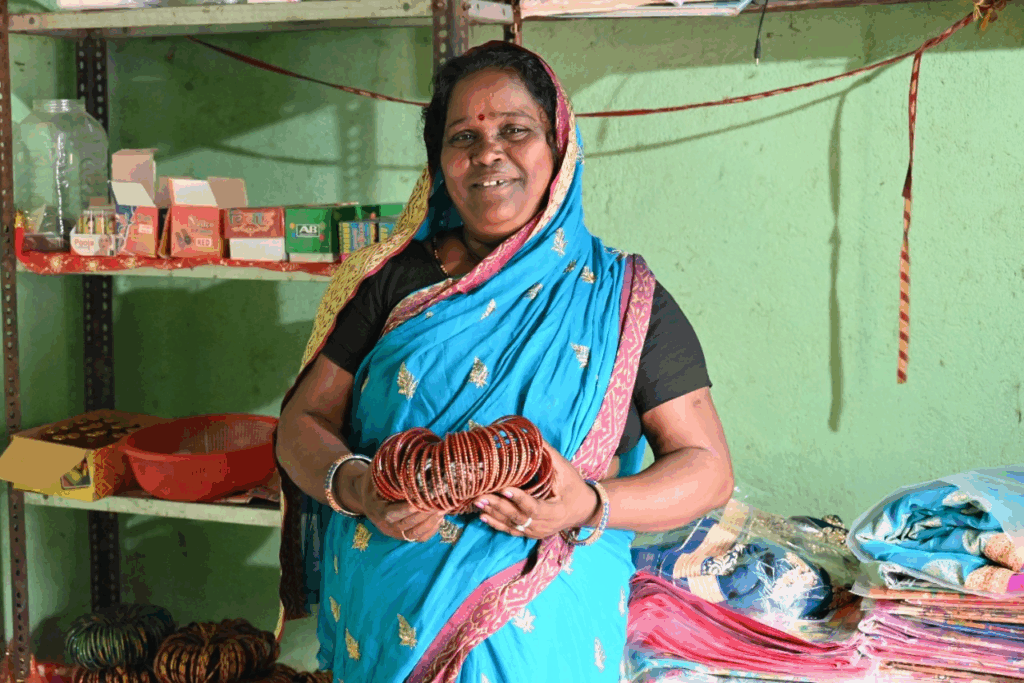
Subhadra Das, a resident of Golamundra village in Bangiriposhi block, Mayurbhanj, exemplifies this change. In her 50s, she lives with her son, daughter-in-law, and two granddaughters. After the untimely death of her husband, the family’s sole breadwinner, Subhadra faced immense financial hardship. A class IX dropout, she worked as a domestic help, while their fragile kachcha ghar added to their struggles. Medical expenses had left her indebted by Rs. 2 lakhs.
Denied membership in existing SHGs due to her poverty, Subhadra formed her own SHG in 2002. With OLM support, she accessed credit and livelihood training. She started a bangles and women’s garment business with a Rs. 10,000 loan, gradually building a stable income of around Rs. 6,000 per month, supplementing her son’s earnings of Rs. 7,000.
Government schemes further strengthened her household. She received a pucca house under PMAY, incentives under BPGY, electrification via the BPL scheme, a gas connection under Ujjwala Yojana, and assistance for a nutria-garden. Benefits from KALIA, Mamata, and Anganwadi support also improved her family’s nutrition, farming, and education.
Financial security has empowered Subhadra socially. She actively mentors other women as a Gram Kalyan Samiti member and aspires to expand her business, support her son’s independence, and provide quality education to her granddaughters.
Her journey demonstrates how targeted livelihood interventions, combined with government support, can transform poverty into empowerment, creating resilient individuals who contribute meaningfully to their communities.